Hypnosis as Unscrupulous
For many years, the general public was very wary of hypnosis. A long history of books and movies associating hypnosis with evil doings was likely the reason.
In 1894, Svengali, a nefarious hypnotist, seduces a young, naive girl in George du Maurier’s book and silent horror movie “Trilby”. In the silent zombie film “The Cabinet of Dr. Caligari” (1919), Caligari uses hypnosis to manipulate Cesare to commit murder.
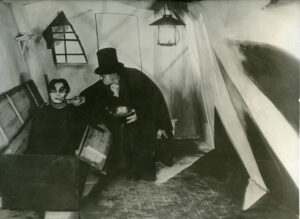
Dr. Caligari hypnotizing Cesare.
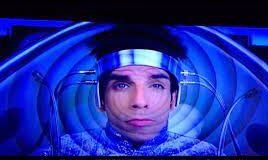
Over time hypnosis found its way into other cinematic genres, such as the spy comedy “Zoolander” in 2001. Fashion model Ben Stiller falls prey to an evil fashion designer whose plan is to hypnotize Stiller to assassinate the Prime Minister of Malaysia.
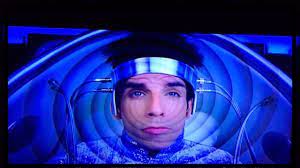
Ben Stiller being hypnotized in Zoolander
As C.W. Briggs, the self-proclaimed best insurance investigator in New York, Woody Allen falls prey to an evil stage hypnotist in the crime comedy “The Curse of the Jade Scorpion” (2001). By repeatedly phoning Woody and issuing a trigger word, the hypnotist puts him in trance and commands him to commit various jewelry thefts.
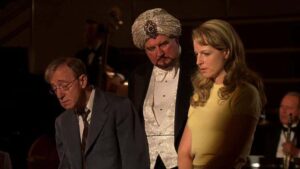
Woody Allen in a deep hypnotic trance
Not all film villains who use hypnosis for immoral purposes are men. In the 2017 American horror film “Get Out,” Catherine Keener as Missy, the therapist/mother of Daniel Kaluuya’s white girlfriend, hypnotizes Chris (Kaluuya’s character) in a seemingly innocent stop smoking session by stirring her tea incessantly.
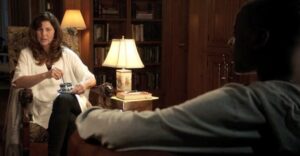 The session turns into a quiet but ruthless interrogation when she induces Chris into a hypnotic state of paralysis so she can probe and exploit his personal pain.
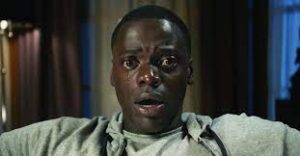
Daniel Kaluuya’s hypnotic paralysis
Hypnosis Vegas Style
Stage shows featuring hypnosis evolved from performances as far back as the 18th and 19th centuries. Scottish surgeon James Braid was said to have developed his technique of hypnosis after witnessing a stage performance by the Swiss “magnetic demonstrator” Charles Lafontaine in November 1841.
While typically not focused on the macabre or horrific, stage hypnotists seek to amuse by injecting light comedy into their demonstrations that call upon volunteers from the audience. At any given time, five, six, seven or more Las Vegas shows feature hypnotists who seemingly cast a spell on their subjects who then exhibit silly or ludicrous behavior.
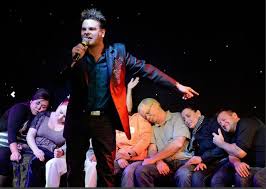
Hypnosis Unleashed with Kevin Lepine
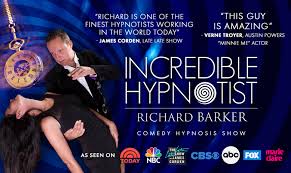
The Incredible Hypnotist Richard Barker
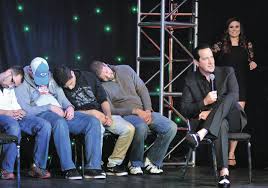
The Anthony Cools Experience
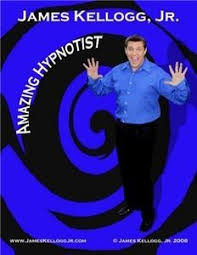
James Kellogg, Jr. is the Amazing Hypnotist
No doubt some of their volunteers have consumed alcohol or smoked grass earlier, so their inhibitions are down. They may be hams who really want to be part of the show and elicit positive attention from the audience and the hypnotist. Naturally they believe the hypnotist wants them to comply with the suggestions and will like them better if they do. If that’s to bark like a dog or cluck like a chicken or… that’s what they’ll do.
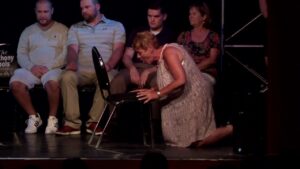
More of the Anthony Cools Experience
The interesting question is: Do the subjects choose to play along or do the hypnotic suggestions compel them to comply? For the answer to that question and a discussion of the distinction between stage hypnosis and clinical hypnotherapy, see “Hypnosis: From Wariness to Acceptance – Part 2“.